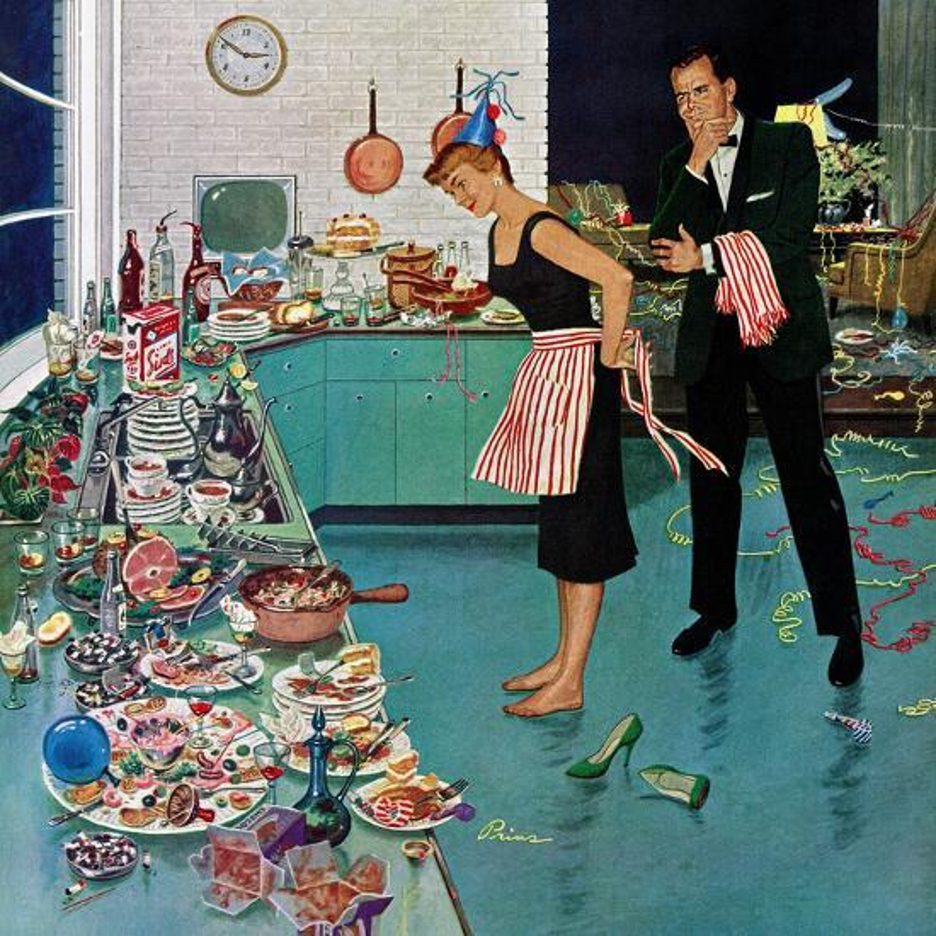
Photo Courtesy of Ben Kimberly Prins, Art.com
A successful holiday gathering at the lake is easy to spot the next morning. There are cluttered countertops, wine rings on your teak table, wax stalagmites clinging to the tablecloth, a trail of crumbs leading to the deck, and perhaps a mysterious maraschino cherry stain whose origin no one seems able to explain. Lake homeowners across the U.S.—from the Northern Great Lakes to the Pacific Northwest—know the post-party ritual well. Your home becomes the setting for one final endurance test—cleaning up quickly, thoroughly, and without damaging the materials you lovingly chose for your retreat.
While the lake itself might feel like an inviting place to rinse off the whole mess, a more strategic approach will save your surfaces, your sanity, and your mornings-after for years to come. With the right prep, a few trusty tools, and a sense of humor about the entire operation, even the most enthusiastic post-soirée footprints can be restored to order fast. Below, we present six savvy tips to tackle the inevitable aftermath efficiently—and perhaps even prevent some of the chaos next time.
Tackle Water Rings Before They Become a Permanent Feature
Illustration Courtesy Ellie Schiltz, Architectural Digest
The hope that everyone will remember to use coasters at your lake home party is aspirational at best. You can prepare, but you can’t completely prevent water rings on your wooden tables and countertops from happening. So do your best. Prepare and scatter coasters, cocktail napkins, and small trays near every natural gathering zone—bar carts, coffee tables, end tables, and outdoor seating. After the party, or the next morning, address water rings quickly. Using a soft microfiber cloth and a dab of mayo or petroleum jelly can work wonders on light rings by reintroducing moisture to the finish. For deeper stains, a low-heat iron placed over a cotton cloth can gently draw out moisture from the wood. But proceed with caution and keep the temperature in check to avoid creating a brand-new problem. Avoid abrasive pads, harsh cleaners, or steam, which can dull protective coatings.
Talking Trash: Anticipate Garbage Overload
Photo courtesy of Paul Oxman Publishing
During an especially lively gathering, trash can indeed get out of control. To minimize chaos at your lake home, set up three designated zones before guests arrive—landfill, recycling, and compost (if your region supports it). Use clearly labeled bins or attractive lidded baskets that blend with the décor, and line each with heavy-duty bags to avoid any tears (or late-night tears) and leaks. During cleanup, do a triage round first. Collect all empty bottles and cans with a dedicated bin, sweep plates and barware into the dish zone, and bag up food scraps. If you live in a wildlife-prone lake region, tie up the bags and store them in a secure garage or shed rather than leaving them outside overnight. And if your area requires sorting recyclables, give yourself a pass for doing it the next morning with coffee in hand—precision sorting is not an après-party midnight sport.
Dish and Glass Triage: Turning the Aftermath Into a System
Photo courtesy of Southern Events
The worst mistake is letting dishes soak indefinitely, especially if you’ve used stoneware, wooden boards, or specialty glasses. Before the party, run an empty dishwasher so it’s ready for loading. Keep a bus tub under the sink to quickly corral dirty items into categories: glassware, plates, serveware, and anything delicate. For lipstick-stained glasses, a tiny dot of baking soda on a damp cloth removes residue without scratching. Clouded wine glasses revive beautifully with a warm vinegar rinse, followed by a microfiber towel—no air-drying, which leaves spots. If guests used the good knives to slice limes on the patio (because someone always does), wash those by hand immediately to protect the edges. For wooden boards and spoons, warm water and mild soap are the rule. Follow with food-safe oil once dry to prevent cracking. And if you own copper mugs or metal tumblers, keep them out of the dishwasher entirely unless you’re intentionally going for a well-aged patina.
Removing Candle Wax Without Losing Your Sanity (or Your Tablecloth)
Photo courtesy of Julia Abbonizio, Architectural Digest
Candlelit lake dinners are lovely—until the wax drips into topographical formations. If you’ve used linens you actually care about, freeze the wax before you scrape. Roll the cloth into a bundle and pop it in the freezer for 20 minutes. Once hardened, the wax lifts off cleanly with a dull knife. Any lingering residue responds well to parchment paper and low heat from an iron, which draws out oily traces. If the wax is pigmented and leaves a dye shadow, treat it with rubbing alcohol or a stain remover formulated for dyes before laundering. For wooden or stone surfaces, skip heat entirely—freeze the wax with an ice cube in a zip-top bag, then gently chip it away. In the future, choose dripless candles or hurricane glass covers, which prevent wax from landing where it shouldn’t. Or embrace LED candles if your lake crowd includes energetic children or enthusiastic storytellers prone to gesticulating near open flame.
Spills That Stain: Red Wine, Sangria, and Other Mishaps
Iconic party mess from the movie Sixteen Candles, courtesy retropopcult, Tumblr
The trifecta of ambitious staining liquids—wine, fruit punches, and anything featuring maraschino syrup—requires swift action. Absorb rather than rub and remember that blotting is your friend. For fabrics and upholstery, sprinkle salt or baking soda to draw up moisture, then follow with a cold-water flush or club soda. On rugs, a 1:1 mix of white vinegar and water often lifts stains surprisingly well, especially if applied early. On stone surfaces like granite or quartzite, avoid acidic cleaners, even vinegar. Instead, use a stone-safe poultice or a mix of baking soda and water applied as a paste for several hours. Wood surfaces fare best when spills are diluted immediately with water and followed with a gentle wood cleaner. The rogue cherry stain—bright, sticky, and bizarrely theatrical—usually responds to mild dish soap and cold water. If not, hydrogen peroxide diluted with water (always test first!) helps break up the dye.
Floors and Countertops: The Final Frontier
Photo courtesy of Art Prints for Pleasure
Scuffs happen when guests dance (either on the floor or the countertops) or drag furniture to create an impromptu “conversation nook.” For hardwood, a tennis ball on the end of a mop handle buffs out most scuffs. For deeper marks, a wood-safe cleaner followed by a conditioning product restores the finish. Stone tile needs only warm water and a neutral cleaner; avoid anything acidic that could etch. For countertops—especially marble or soapstone—use pH-neutral cleaners and microfiber cloths. Baking soda works for removing greasy fingerprints, while a plastic scraper safely lifts dried spills. Before events, a discreet runner rug near high-traffic zones and silicone trivets on kitchen counters can prevent half the cleanup work.
Cleaning up after a holiday party at the lake isn’t glamorous, but with the right systems, smart prep, and a little humor, the aftermath becomes manageable—and occasionally satisfying. Restoring order lets you reclaim your serene retreat, ready for the next gathering, whether spontaneous or meticulously planned. And when you can tackle wine stains, wax, crumbs, and mystery marks with calm expertise, you officially graduate from host to seasoned lake-home host extraordinaire. For more inspired tips and cleaning hacks to live your best lake life, visit Lake Homes Lifestyles.
Jeanne Delathouder
I was born in Chicago, raised in the Midwest, and studied creative writing and journalism at the University of Iowa. I was quickly immersed in Southern culture when I moved to Birmingham, Alabama, and became a writer and editor for Southern Accents Magazine at Time Warner. The lavish interiors and grand architecture of the region inspired me to study interior design while working as an editor.
Today I am a lifestyle journalist, editor, brand strategist, and communications specialist with more than 25 years of experience managing and producing content for magazines, books, digital, television, and sales/marketing/PR assets. I am honored to put my skills to work creating lifestyle content for Lake Homes Realty and its ever-growing sister brands including Beach-Homes Realty and Mountain Homes Realty.